
Ahoi Ashtami 2026: Date, Puja Muhurat, Vrat Katha and Puja Vidhi
A day of prayer, devotion and family traditions, Ahoi Ashtami is observed by many families for the health, happiness and well-being of their children.
Ahoi Ashtami is an important Hindu vrat observed by many mothers who pray to Ahoi Mata for the well-being and long life of their children. The day is traditionally marked by fasting, evening prayers, the reading of the Ahoi Ashtami Vrat Katha and star-sighting rituals.
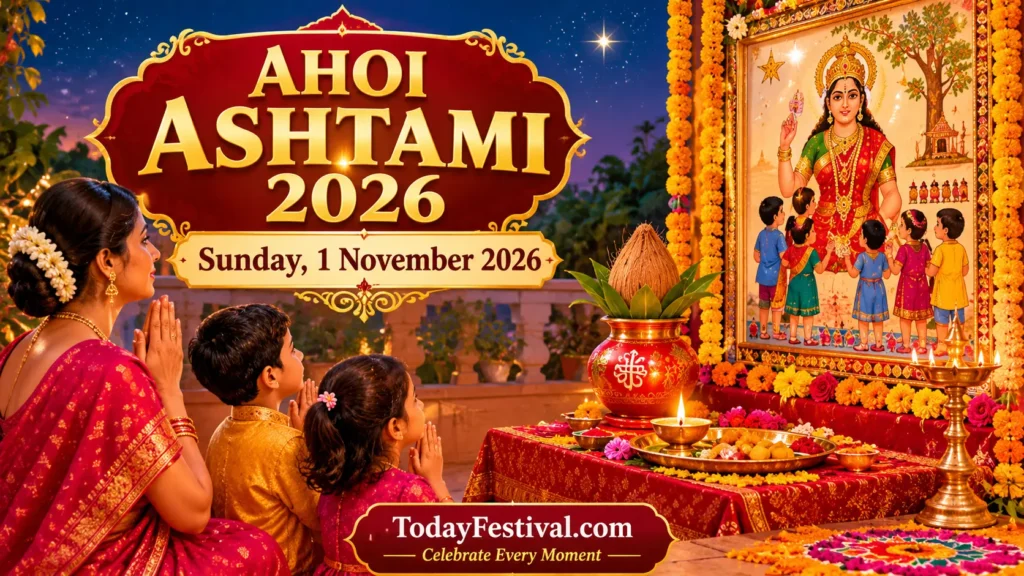
In 2026, Ahoi Ashtami falls on Sunday, 1 November. Families prepare for the evening puja with a picture or traditional drawing of Ahoi Mata, a decorated place of worship and offerings made according to their customs. Although the rituals may differ from one household to another, the feeling behind the observance remains centred on love, prayer and family.
Ahoi Ashtami 2026: Quick Information
Timing note: All timings in this information card are for New Delhi, India, in Indian Standard Time (IST). Puja and star-sighting timings vary by location. Please check your local Panchang before observing the vrat.
When Is Ahoi Ashtami in 2026?
Ahoi Ashtami will be observed on Sunday, 1 November 2026. It is traditionally associated with the Ashtami Tithi, or eighth day, of the Krishna Paksha, the waning phase of the lunar month.
In the North Indian Purnimanta calendar, the observance is commonly referred to as Kartik Krishna Ashtami. In regions following the Amanta calendar, including Maharashtra and Gujarat, the same observance may be listed during the month of Ashwin. This is a difference in calendar month naming, so readers should follow the Panchang customary in their region.
Ahoi Ashtami comes after Karwa Chauth and before Diwali. In 2026, Karwa Chauth falls on 29 October and Diwali is listed for 8 November. For many households, Ahoi Ashtami is one of the important observances in the run-up to the Diwali celebrations.
Ahoi Ashtami 2026 Puja Muhurat and Tithi Timings
The evening is the main time for Ahoi Mata worship in many North Indian households. The following Panchang timings are for New Delhi, India.
| Panchang Detail | Date and Time (IST) |
|---|---|
| Ahoi Ashtami | Sunday, 1 November 2026 |
| Ashtami Tithi Begins | 1 November, 2:51 PM |
| Ashtami Tithi Ends | 2 November, 1:10 PM |
| Ahoi Ashtami Puja Muhurat | 5:36 PM – 6:54 PM |
| Evening Star-Sighting Time | Around 6:00 PM |
These are New Delhi timings, not nationwide timings. The evening puja window and time for sighting stars can change with the location. The actual visibility of stars can also depend on local weather and the sky.
Significance of Ahoi Ashtami
Ahoi Ashtami is traditionally associated with a mother's prayers for the health, happiness and well-being of her children. Devotees worship Ahoi Mata with faith and observe a vrat as an expression of care, devotion and family responsibility.
The image of Ahoi Mata is an important part of the observance. In some traditional drawings, the goddess is shown with the syahu, commonly understood as a porcupine, and its young. These figures are connected with the vrat katha heard during the puja.
The observance has traditionally been popular in North India. Today, many families understand its prayers as being for the well-being of both sons and daughters. Some people also observe the vrat while praying for the blessing of children. Personal beliefs and customs differ, and families may follow their own traditions.
Ahoi Ashtami Puja Vidhi: Step-by-Step Guide
Ahoi Ashtami puja is generally performed in the evening. The exact procedure can vary by region and household. The following steps describe a commonly followed form of the observance.
- Prepare for the day: Families observing the vrat begin their preparations according to their customary fasting practice. The puja items and offerings can be arranged ahead of the evening.
- Clean the puja area: Choose a clean space in the home for worship. Some households decorate the area with rangoli or a simple traditional design.
- Prepare the Ahoi Mata image: A traditional image or drawing of Ahoi Mata is placed on the wall or on a suitable surface. Some families use a printed picture instead.
- Arrange the puja items: Keep the diya, roli, rice, flowers, water and food offerings ready. A karwa or small water pot may also be used according to family custom.
- Light the diya: At the customary evening puja time, light the lamp and offer prayers to Ahoi Mata with devotion.
- Offer flowers and prasad: Make the traditional offerings used by your family. Common offerings include sweets, halwa or puri.
- Listen to the vrat katha: Read or listen to the Ahoi Ashtami Vrat Katha. It is an important part of the evening observance in many households.
- Perform the aarti: Complete the worship with the Ahoi Mata aarti or the customary prayers followed in your home.
- Complete the fast: In families that follow the star-sighting custom, prayers are offered to the stars when they become visible and the fast is completed according to family tradition. Some households follow a different custom.
There is no single procedure followed by every family. Follow the local tradition and the guidance customary in your household.
Ahoi Ashtami Puja Samagri Checklist
Preparing the puja items in advance can make the evening more comfortable. The list below includes items commonly used in Ahoi Ashtami worship. You may not need every item, as practices vary between families.
- Ahoi Mata picture or traditional drawing
- Roli or kumkum
- Akshat (rice grains)
- Fresh flowers
- Diya and cotton wicks
- Oil or ghee for the lamp
- Incense sticks, if used in your home
- Water in a small vessel or karwa
- Fruits and traditional sweets
- Halwa, puri or other customary prasad
- Silver syahu, if followed in your family tradition
- A small plate or thali for the offerings
Ahoi Ashtami Vrat Katha: The Traditional Story
One widely told Ahoi Ashtami folk story is about a moneylender's wife who went to collect earth while preparing her home before Diwali. As she dug the ground, her tool accidentally struck a young porcupine in its burrow. She had not intended to hurt the creature, but she was deeply saddened by what had happened.
In the story, sorrow later entered her household. Grief-stricken, the woman spoke about the incident to the elder women of the village. They advised her to seek forgiveness and worship Ahoi Mata on the Ashtami day with sincere devotion.
The woman followed their advice. She observed the vrat, prepared the traditional image, offered prayers and remembered her mistake with a sincere heart. The story concludes with the return of happiness to her home through the grace of Ahoi Mata.
This is a traditional household vrat katha, and its details vary across regions and printed versions. Some tellings include additional characters and events, while others describe the ending differently. The story is commonly remembered for its themes of compassion towards living beings, repentance, faith and a mother's prayers for her family.
Ahoi Ashtami Fasting Rules and Traditions
Many devotees traditionally observe a fast during the day and complete it after the evening worship. In some households, the fast is broken after sighting stars; in others, the family follows a different practice. The type of fast, its duration and the food permitted can vary.
Some families observe a strict fast, while others follow a more flexible form according to their circumstances and customs. The purpose of the observance is devotional, and people should not feel pressured to follow a practice that is unsuitable for them.
Anyone with a medical condition, anyone who is pregnant or breastfeeding, or anyone for whom fasting may be unsuitable should prioritise their health. Seek appropriate medical guidance and follow a safe approach rather than undertaking a strict fast against medical advice.
Ahoi Ashtami Celebrations and Customs
The evening puja often brings family members together. Homes may be prepared with flowers, a small rangoli, a diya and a picture of Ahoi Mata. Some families use a traditional wall drawing, while others prefer a framed or printed image.
In certain households, the syahu and its young are included in the drawing or represented through a small silver figure. Traditional sweets and other food offerings may be prepared for the puja. Family members may sit together to listen to the vrat katha and take part in the aarti.
Star-sighting is another familiar part of the observance. Families who follow this custom wait for stars to become visible in the evening before completing the fast. For many people, Ahoi Ashtami is not only a religious observance but also a time to keep family traditions alive and share prayers across generations.
Frequently Asked Questions About Ahoi Ashtami 2026
1. When is Ahoi Ashtami in 2026?
2. Why is Ahoi Ashtami celebrated?
3. Who is worshipped on Ahoi Ashtami?
4. What is the Ahoi Ashtami Puja Muhurat in 2026?
5. When does Ashtami Tithi begin and end in 2026?
6. What is the traditional star-sighting time?
7. What items are used for Ahoi Ashtami Puja?
8. Do all families follow the same fasting rules?
9. Is Ahoi Ashtami observed for daughters as well as sons?
10. Is Ahoi Ashtami related to Karwa Chauth and Diwali?
A Day of Faith, Care and Family Traditions
Ahoi Ashtami brings together prayer, family traditions and a mother's hopes for her children's well-being. Whether a household follows an elaborate puja or a simple evening prayer, the observance holds a special place in the lives of many devotees.
As families prepare for Ahoi Ashtami on 1 November 2026, may the day bring peace, happiness and togetherness to their homes.
TodayFestival.com – Celebrate Every Moment.