
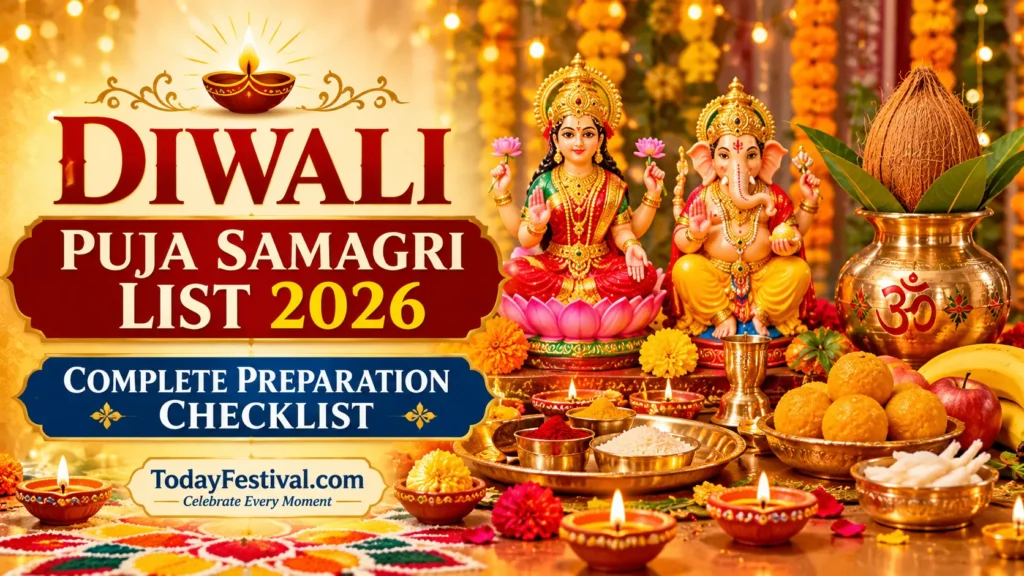
Diwali Puja Samagri List 2026: Complete Preparation Checklist
Diwali is a special time for families to come together, decorate their homes and offer prayers. In 2026, Diwali falls on Sunday, 8 November. For many Hindu households, Lakshmi-Ganesh Puja is an important part of the celebration. Having the required materials ready beforehand can make the evening more organised and peaceful. This Diwali Puja Samagri List 2026 brings together commonly used worship essentials, diyas, flowers, prasad, optional traditional offerings and practical shopping suggestions. Whether you are arranging your first home puja or following your family's annual tradition, use this checklist to plan your preparations without buying unnecessary items.
Diwali 2026: Quick Information
1. Diwali 2026: Date and Preparation
Diwali, also known as Deepawali, is widely celebrated as the festival of lights. Homes and entrances are decorated with lamps, rangoli and festive decorations. Many families perform Lakshmi Puja and worship Lord Ganesha as part of their Diwali observance.
The festival is associated with Kartik Amavasya, the new moon period of the Hindu lunar calendar. However, the exact observance of individual rituals and their timings can depend on the local Panchang, geographical location and family tradition.
For the 2026 celebration, keep your reusable puja materials ready in advance. You can purchase dry items earlier and arrange fresh flowers, fruits and sweets closer to the celebration.
You can also use the Hindu Panchang Calculator to explore tithi and other relevant Panchang details for your selected date.
2. Complete Diwali Puja Samagri List 2026
The items used during Diwali Puja are commonly called puja samagri. Some materials are used for worship, others are offered to the deities, and a few are arranged for decoration. The checklist below groups commonly used materials so that you can prepare them category by category.
Tick the items as you arrange or purchase them.
2.1 Lakshmi-Ganesh Idol and Puja Setup
Start with a clean and organised place for worship. Many households arrange the idols or pictures on a small raised platform, covered with a clean cloth. A kalash and other traditional materials may also be placed according to the family's method of worship.
Puja Setup Checklist
Check the items you already have or need to arrange.
2.2 Basic Puja and Sacred Materials
These materials are commonly used for applying tilak, making offerings and performing different parts of the worship. Their exact use and arrangement may vary with the puja vidhi followed by a household.
Sacred Materials Checklist
2.3 Diya and Lighting Materials
Lighting lamps is one of the most recognisable parts of Diwali. Families commonly arrange clay diyas, cotton wicks and a suitable fuel before the evening worship. Some use ghee for the main puja lamp, while others follow their household tradition of using oil or different lamps.
Diya and Lighting Checklist
2.4 Puja Utensils
Clean utensils make it easier to arrange the worship materials. You do not necessarily need to purchase a complete new set every year. Check your home mandir first and reuse suitable, clean utensils.
Utensils Checklist
2.5 Flowers and Decoration Materials
Flowers and decorations help create a welcoming worship area. Marigold garlands, rangoli and decorative diyas are commonly used during Diwali. Some flowers are also offered during puja, depending on the deity and local custom.
Decoration Checklist
2.6 Prasad and Bhog Items
Naivedya or bhog refers to food offered during worship. Families may prepare homemade sweets, fruits or traditional offerings. The choice depends on regional practices, family preferences and the puja being performed.
Prasad and Bhog Checklist
2.7 Additional and Optional Puja Materials
Some families include additional materials in their Lakshmi Puja arrangements. Business households may also perform rituals connected with their account books and financial records.
Optional and Family-Specific Checklist
These items are not necessary for every household or every version of the puja.
3. Meaning and Significance of Important Diwali Puja Items
Many materials used during Diwali Puja have a traditional or symbolic meaning. Understanding these associations can help families appreciate the preparation rather than treating it as a simple shopping exercise.
Diya and Light
A diya represents light and is associated with the movement from darkness towards knowledge and hope. Lighting lamps is central to the visual celebration of Deepawali.
Kalash and Coconut
A kalash is a traditional vessel used in many Hindu worship practices. When prepared with water, leaves and a coconut according to family custom, it represents auspiciousness and abundance.
Kumkum and Haldi
Kumkum and turmeric are commonly used in Hindu rituals. They are associated with auspiciousness and are used for tilak and other traditional offerings.
Akshat (Unbroken Rice)
Akshat refers to whole, unbroken rice grains. Rice is used in many forms of Hindu worship as an offering. Some households mix it with a little turmeric when preparing their puja materials.
Flowers
Fresh flowers are traditional offerings in many forms of worship. Their fragrance, freshness and colour also contribute to the festive arrangement. The preferred flowers may differ between households and deities.
Incense and Dhoop
Incense sticks and dhoop are commonly used to create a fragrant worship environment. Some families include them during aarti and other stages of puja.
Coins and Wealth Offerings
Coins and other traditional wealth-related offerings are placed before Goddess Lakshmi in many households. They express prayers for prosperity, financial responsibility and well-being.
Fruits and Sweets
Fruits and sweets are common food offerings. Homemade preparations are also used as bhog, reflecting family recipes and regional food traditions.
4. Minimum Samagri Required for a Simple Lakshmi Puja
Not every family arranges a large puja setup. Beginners and households with limited time may prefer to prepare a smaller selection of commonly used materials. The following is a simple starting checklist, not a universally prescribed puja vidhi.
Basic Lakshmi-Ganesh Puja Checklist
- Lakshmi and Ganesha idols or photographs.
- A clean platform and puja cloth.
- A small diya with a cotton wick and ghee or oil.
- Kumkum, haldi and akshat.
- Fresh flowers or petals.
- Incense sticks, if used by the household.
- A small plate and clean water.
- Fresh fruit or a sweet for offering.
- A few coins or another traditional offering.
Use the items that fit your household's customs. Do not feel that you must purchase an expensive kit or arrange every optional material to perform a simple home puja. For detailed ritual procedures, follow your family tradition or the guidance of a trusted priest.
5. Region-Wise Diwali Puja Traditions
Diwali is celebrated across India, but the way families observe it is not identical everywhere. The worship materials and food offerings can change with local customs, community traditions and the family's preferred method of worship.
North India
Many North Indian households organise Lakshmi-Ganesh Puja on Diwali evening. Common preparations include idols or pictures, a decorated chowki, diyas, flowers, sweets, coins and an aarti thali. Rangoli and illuminated entrances are also popular parts of home celebrations.
Maharashtra
In Maharashtra, Diwali celebrations often include traditional home worship, decorative akash kandils, rangoli and Diwali faral such as chakli, karanji and ladoo. Lakshmi Pujan is an important part of the celebrations for many families. The exact food offerings and ritual arrangements vary by household.
Gujarat
Gujarat has a strong tradition of Chopda Puja, which is associated with worshipping account books and seeking blessings for business and prosperity. Families and business owners may arrange new account books, pens and other stationery along with their regular worship materials.
West Bengal
In West Bengal, Kali Puja is an important observance on the Diwali Amavasya night. This differs from the Lakshmi-Ganesh worship followed by many households elsewhere. Bengal also has a distinct Kojagori Lakshmi Puja tradition, observed on the autumn full moon. Customs should therefore be described according to the specific Bengali observance rather than assuming that all regions perform the same Diwali puja.
South India
In many South Indian households, Deepavali preparations include an early-morning oil bath, new clothes, sweets, savoury snacks and family celebrations. The ritual sequence and worship materials differ across states and communities. Some families include Lakshmi worship, while others emphasise different traditional observances.
6. How to Prepare for Diwali Lakshmi Puja at Home
Once the materials have been collected, arranging them in advance makes the puja area easier to manage. A simple preparation sequence can help you avoid searching for small items at the last minute.
Give particular attention to the entrance, living area and place selected for worship.
Choose a clean, stable location where the family can sit comfortably and the materials can be arranged safely.
Clean the platform and place the cloth preferred by your family tradition.
Keep the Lakshmi and Ganesha idols or photographs ready for worship.
Prepare them according to the method followed in your household.
Keep kumkum, haldi, rice, flowers, incense and other materials together on clean plates or trays.
Check the wicks, ghee or oil, matchbox, bell and aarti thali. Arrange them away from combustible decorations.
Arrange fresh offerings in clean plates and cover food until it is needed.
Use a reliable local Panchang or the TodayFestival.com Shubh Muhurat Calculator to check the relevant auspicious timing for your location.
Keep frequently used items within reach so that the family can concentrate on the prayers.
This is a practical preparation order. The actual worship sequence can be different depending on the family or regional puja vidhi.
7. Diwali Shopping Checklist 2026: What to Buy and When
A useful way to prepare is to divide your shopping into reusable materials, fresh offerings and things that may already be available at home.
Buy Early: Reusable and Dry Materials
- Puja utensils and aarti thali.
- Lakshmi and Ganesha idols or photographs, if needed.
- Kalash and puja cloth.
- Clay diyas and cotton wicks.
- Incense sticks, dhoop and camphor.
- Roli, kumkum, haldi and chandan.
- Dry offerings and other traditional materials.
- Rangoli colours and doorway decorations.
Buy Closer to Diwali: Fresh Materials
- Fresh marigold and other flowers.
- Flower garlands.
- Fresh coconut and mango leaves, where required.
- Fruits for bhog.
- Fresh sweets or homemade prasad ingredients.
- Other perishable offerings required by your family.
Check at Home Before Shopping
- Existing puja utensils and plates.
- Remaining cotton wicks.
- Kumkum, haldi and rice.
- Incense and camphor.
- Clean aarti thali and small bowls.
- Reusable decoration materials.
- Remaining dry fruits and traditional offerings.
Dhanteras falls on Friday, 6 November 2026, so it is a useful planning milestone for completing much of the dry-item shopping. However, you do not need to buy everything on a particular day. Check your household inventory first and purchase only what is missing.
8. Common Mistakes to Avoid Before Diwali Puja
- Leaving shopping until the last evening: Purchase reusable items and dry materials earlier to avoid rushed shopping.
- Forgetting small essentials: Check cotton wicks, matchboxes, incense and camphor before the worship begins.
- Buying fresh flowers too early: Arrange flowers and other perishable offerings closer to the festival.
- Ignoring the puja area: Clean and organise the utensils and worship platform in advance.
- Buying unnecessary duplicate items: Check what is already available at home before purchasing another set.
- Confusing optional and essential items: Follow your own family tradition instead of treating every online checklist as compulsory.
- Using an incorrect muhurat: Avoid copying a timing calculated for another city. Check a reliable location-specific Panchang.
- Ignoring regional traditions: Understand which observance and ritual sequence your family actually follows.
9. Frequently Asked Questions About Diwali Puja Samagri 2026
1. When is Diwali Lakshmi Puja in 2026?
Diwali Amavasya and Lakshmi Pujan are listed for Sunday, 8 November 2026. The suitable worship timing should be checked for your city and family tradition.
2. What is the complete Diwali Puja Samagri List for 2026?
Common materials include Lakshmi and Ganesha idols or photographs, a chowki, puja cloth, kalash, water, coconut, kumkum, haldi, akshat, flowers, diyas, cotton wicks, ghee or oil, incense, camphor, aarti utensils, fruits and sweets. Additional materials depend on family customs.
3. What are the essential items for Lakshmi-Ganesh Puja?
A simple home arrangement commonly includes the deities' idols or photographs, a clean place for worship, a diya, cotton wick, suitable fuel, kumkum, haldi, rice, flowers and a small food offering. Follow your household's specific ritual requirements.
4. Can Lakshmi Puja be performed with a simple samagri list?
Many households perform a simple home puja with the materials available to them. The exact ritual requirements depend on the method of worship followed. You do not need to purchase every optional item listed in a detailed shopping guide.
5. Which flowers are commonly offered during Diwali Lakshmi Puja?
Marigold, lotus and rose flowers or petals are used in many households. Availability and family traditions influence the choice. Follow the offerings customary in your home.
6. Is ghee or oil used for lighting Diwali diyas?
Both are used in different households. Some families prefer ghee for the main worship lamp and oil for additional diyas, while others follow a different custom. Use a stable lamp and take appropriate fire-safety precautions.
7. When should I purchase Diwali Puja Samagri?
Arrange reusable utensils, diyas, wicks and dry materials in advance. Purchase fresh flowers, fruit and sweets closer to Diwali so they remain fresh for the celebration.
8. Are Diwali Puja items the same in every Indian state?
No. Some basic materials are widely used, but offerings and worship practices vary by region, community and family. For example, Gujarat has Chopda Puja traditions, while Kali Puja is important in Bengal on Diwali Amavasya.
9. What should I do if some puja materials are unavailable?
Follow your family's customary alternatives or ask a trusted family priest about ritual-specific requirements. Avoid assuming that a costly or uncommon item is compulsory simply because it appears on an online shopping list.
10. Conclusion
Preparing for Diwali does not have to become a last-minute rush. A little planning, a clean worship area and a well-organised collection of commonly used puja materials can make the celebration easier for the whole family.
Use this Diwali Puja Samagri List 2026 to check your supplies, purchase only the items you need and arrange fresh offerings closer to the festival. Remember that household customs and regional practices can differ. What matters is preparing thoughtfully and celebrating the occasion with sincerity, gratitude and time together with loved ones.
Wishing you and your family a peaceful, joyful and prosperous Diwali!
Celebrate Every Moment – TodayFestival.com