
Govardhan Puja 2026: Date, Annakut, Puja Vidhi and Significance
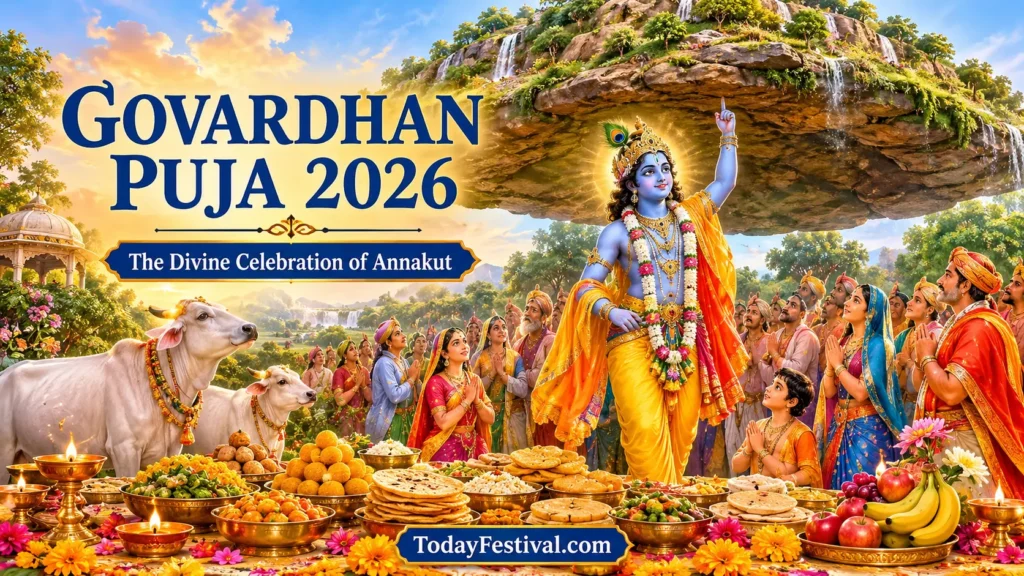
Govardhan Puja is an important Hindu festival dedicated to Lord Krishna and Govardhan Parvat. Celebrated with devotion, food offerings and traditional rituals, the festival remembers how Lord Krishna protected the people and cattle of Vrindavan from heavy rainfall by lifting Govardhan Hill. Govardhan Puja 2026 has a date variation in published Panchang calendars: the Pune calculation gives November 9, while the New Delhi calculation gives November 10. The festival is also widely known as Annakut, a celebration of gratitude, food and devotion.
Last updated: 2 November 2026In This Article
Govardhan Puja 2026 Date and Shubh Muhurat
Govardhan Puja is associated with Kartik Shukla Pratipada, the first day of the bright lunar fortnight in the Hindu month of Kartik. In 2026, the Pratipada Tithi extends across November 9 and November 10. Because different Panchang calculations and religious observance traditions select different Puja windows, some calendars list November 9 while others list November 10.
Pune – Sayankala Puja
9 November 2026Day: Monday
Muhurat: 3:42 PM – 5:59 PM
Type: Evening Puja
New Delhi – Pratahkala Puja
10 November 2026Day: Tuesday
Muhurat: 6:40 AM – 8:50 AM
Type: Morning Puja
Govardhan Puja 2026: Quick Information
| Information | Details |
|---|---|
| Festival | Govardhan Puja 2026 |
| Other Name | Annakut Puja |
| Pune Observance | Monday, 9 November 2026 |
| New Delhi Observance | Tuesday, 10 November 2026 |
| Hindu Month | Kartik |
| Paksha | Shukla Paksha |
| Tithi | Pratipada |
| Pratipada Begins | 9 November, 12:31 PM |
| Pratipada Ends | 10 November, 2:00 PM |
| Pune Sayankala Muhurat | 3:42 PM – 5:59 PM, 9 November |
| Delhi Pratahkala Muhurat | 6:40 AM – 8:50 AM, 10 November |
All timings above are in Indian Standard Time (IST). Tithi and Muhurat information is presented according to the respective city calculations. Small timing differences may occur between Panchang sources.
Why Is Govardhan Puja 2026 on November 9 in Pune and November 10 in Delhi?
The difference is connected with the way festival observances are calculated. The Kartik Shukla Pratipada Tithi begins during the afternoon of November 9 and continues until the afternoon of November 10.
The Pune calculation identifies an evening Puja window on November 9, while the New Delhi calculation identifies a morning Puja window on November 10. Other religious calendars, including some Vaishnava temple calendars, also publish November 10 for the festival.
Therefore, a date printed on a general festival calendar may not automatically apply to every city or temple. People planning to perform the Puja should follow the local Panchang and the tradition observed by their family or temple.
To understand the day's Tithi and other Hindu calendar details, you can use the Hindu Panchang Calculator. For checking auspicious timings, visit the Shubh Muhurat Calculator.
Why Is Govardhan Puja Celebrated?
Govardhan Puja is celebrated to remember Lord Krishna's protection of the people of Vrindavan and his divine connection with Govardhan Parvat. The festival carries an important message about gratitude, nature, food, animals and the simple resources that support everyday life.
According to Hindu tradition, Lord Krishna encouraged the people of Vrindavan to recognise the importance of Govardhan Hill, the forests, the grazing fields and the cows that supported their community. The hill provided grass and natural resources for the villagers and their cattle.
Devotees celebrate the occasion by worshipping Lord Krishna, offering different vegetarian dishes, decorating a symbolic Govardhan Hill and performing traditional prayers. In many places, cows are also honoured as part of the celebration.
The festival is also closely connected with Annakut, in which devotees prepare and offer a variety of food as an expression of thankfulness and devotion.
What Does the Festival Remind Us?
- Respect and care for the natural environment.
- Gratitude for food, water and agricultural resources.
- The importance of protecting animals and cattle.
- Faith, humility and kindness towards others.
- The value of sharing food with family and the community.
Govardhan Puja Story: Why Did Lord Krishna Lift Govardhan Hill?
The story of Govardhan Puja is traditionally associated with Lord Krishna's childhood in Vrindavan. It is popularly known as Govardhan Leela and explains the significance of worshipping Govardhan Parvat.
The Villagers and Their Worship of Lord Indra
According to the traditional story, the residents of Vrindavan followed the practice of worshipping Lord Indra, the deity associated with rain. They believed that his blessings would bring rainfall, helping their crops grow and providing grass and water for their cattle.
One day, young Lord Krishna asked the villagers why they were preparing offerings for Lord Indra. He explained that their daily lives were closely connected with Govardhan Hill, its forests, natural water sources and the surrounding environment.
Krishna encouraged the villagers to show gratitude towards Govardhan Parvat, the cows and the natural resources that supported their lives.
Lord Indra Becomes Angry
Following Krishna's suggestion, the people of Vrindavan prepared offerings for Govardhan Hill instead of continuing their traditional worship of Lord Indra. This angered Indra, who decided to send heavy rainfall and powerful storms over the village.
The rain continued, creating fear among the villagers and putting their homes and cattle in danger. Unable to find protection from the storm, the people turned to Lord Krishna for help.
Krishna Lifts Govardhan Parvat
To protect the villagers, Lord Krishna lifted the enormous Govardhan Hill on the little finger of his left hand. The hill became a natural shelter for the people and their cattle, who gathered beneath it to remain safe from the heavy rainfall.
According to the story, Krishna held the mountain until the storm ended. Lord Indra then understood the greatness of Krishna and recognised the importance of humility.
This event is remembered as Govardhan Leela. Lord Krishna is also known by names such as Giridhari and Govardhanadhari because of this divine act.
What Is Annakut? Why Is It Important in Govardhan Puja?
Annakut is one of the most important traditions associated with Govardhan Puja. The word Annakut means a mountain or heap of food. On this occasion, devotees prepare different types of vegetarian dishes and arrange them as an offering before Lord Krishna.
The tradition is connected with the story of Govardhan Leela. After Krishna encouraged the villagers to worship Govardhan Hill, they prepared a large food offering as a gesture of gratitude. Annakut celebrations remember this tradition.
What Food Is Prepared for Annakut?
Annakut offerings can include rice, dal, chapati, puri, seasonal vegetables, sweets, fruits, dairy preparations and other traditional dishes. The selection depends on local customs, the temple's tradition and the family's preferences.
In many temples, the food is arranged in a decorative mountain-like display. After the offering and prayers, the food is distributed among devotees as Prasad.
What Is Chhappan Bhog?
Chhappan Bhog refers to an offering of 56 different food items to Lord Krishna. It is a well-known devotional tradition associated with Annakut celebrations in several Krishna temples.
The offerings may include sweets, savoury dishes, fruits, dairy preparations and other vegetarian foods. Large temples sometimes prepare elaborate displays of Chhappan Bhog for devotees.
However, preparing exactly 56 dishes is not compulsory for every household. Families can offer a smaller selection of homemade food according to their means and traditions. The devotion behind the offering is more important than the quantity of dishes.
Popular Annakut Food Offerings
- Rice and different varieties of pulao.
- Dal and traditional vegetable preparations.
- Puri, chapati and other homemade breads.
- Kheer and other milk-based sweets.
- Laddoo, peda and traditional mithai.
- Seasonal fruits and dry fruits.
- Curd, butter and other dairy preparations.
Govardhan Puja Samagri List 2026
Preparing the Puja Samagri in advance makes it easier for families to perform Govardhan Puja at home. The exact list can differ according to regional practices and family traditions.
Essential Puja Items
- Idol or picture of Lord Krishna.
- Govardhan Hill representation made using traditional materials or a suitable image.
- Fresh flowers and flower garlands.
- Tulsi leaves.
- Roli and Kumkum.
- Akshat (unbroken rice grains).
- Incense sticks and diya.
- Ghee or oil for lighting the lamp.
- Water and a Puja Thali.
- Fruits and traditional sweets.
- Milk and curd.
- Panchamrit ingredients.
- Traditional vegetarian food preparations.
- Items needed for Aarti.
Items for Preparing Govardhan Hill
Some families prepare a symbolic Govardhan Hill using cow dung, as part of their traditional practice. Others use clay, dough, a decorative arrangement or an image of Govardhan Parvat, depending on their family customs and available space.
Flowers, leaves, small decorations and traditional lamps can be used to decorate the symbolic hill.
Food Preparations for Annakut
Prepare a selection of vegetarian dishes for the Annakut offering. These may include rice, dal, vegetable preparations, puri, sweets, fruits and other foods traditionally offered in your household.
Govardhan Puja Vidhi 2026: Step-by-Step Puja at Home
Govardhan Puja is celebrated through traditional prayers, offerings and worship of Lord Krishna and Govardhan Parvat. Families can perform a simple Puja at home by following their customary practices.
The following is a general outline of the traditional Govardhan Puja Vidhi. Specific mantras, timings and ritual procedures can vary between regions, temples and family traditions.
1Clean the Puja Area
Begin by cleaning the place where the Puja will be performed. Arrange a clean cloth, Puja Thali and the necessary ritual items. A tidy space helps the family prepare for the worship peacefully.
2Take a Bath and Prepare the Samagri
Family members traditionally take a bath and wear clean clothes before the Puja. Arrange flowers, Tulsi leaves, Akshat, Kumkum, incense sticks, a diya, fruits and food offerings.
3Prepare the Govardhan Representation
Prepare a symbolic Govardhan Hill according to your family tradition. Some families use cow dung, while others prefer clay or a decorative arrangement. Decorate it with flowers, leaves and other traditional items.
4Place Lord Krishna's Idol or Picture
Place the idol or picture of Lord Krishna near the Puja arrangement. Decorate the worship area with flowers and prepare the offerings for the prayers.
5Offer Flowers, Tulsi and Traditional Items
Offer fresh flowers, Tulsi leaves, Roli, Kumkum and Akshat according to your household tradition. Milk, curd, Panchamrit and fruits may also be offered where customary.
6Prepare and Offer Annakut
Arrange the prepared vegetarian dishes before Lord Krishna. Families may place rice, dal, vegetables, sweets, fruits and other homemade preparations as part of the Annakut offering.
7Perform Govardhan Puja and Krishna Aarti
Offer prayers to Lord Krishna and Govardhan Parvat. Perform Aarti using a traditional diya and sing the family's preferred devotional prayers or Krishna Aarti.
8Offer Prayers and Perform Traditional Rituals
Pray for peace, gratitude and the well-being of the family. Families who follow the custom may also perform Govardhan Parikrama or Gau Puja as part of the celebration.
9Distribute Prasad
Once the offering is completed according to your tradition, distribute the Prasad among family members, neighbours and other devotees. Sharing food is an important part of the Annakut celebration.
Important Traditions Associated with Govardhan Puja
1. Govardhan Parikrama
Govardhan Parikrama is a traditional practice in which devotees walk around Govardhan Hill as an expression of devotion. The sacred hill is located in the Braj region of Uttar Pradesh and is closely connected with the life and stories of Lord Krishna.
Many devotees visit Govardhan throughout the year, while special gatherings and religious activities take place during important Krishna festivals.
2. Gau Puja
Cows hold an important place in many Hindu traditions, particularly in the stories of Lord Krishna's childhood. During Govardhan Puja, families and temples in some regions decorate and honour cows as part of the celebration.
Feeding cattle and treating animals with care are also associated with the festival's message of gratitude and compassion.
3. Annakut Offering
Annakut is one of the central attractions of Govardhan Puja in many Krishna temples. Devotees prepare numerous vegetarian dishes and offer them to Lord Krishna before distributing the food as Prasad.
4. Krishna Aarti
Aarti is performed to express devotion to Lord Krishna. Families and temple devotees sing devotional songs and offer lamps during the worship.
5. Community Food Distribution
In many places, temples and community groups arrange food offerings and distribute Prasad among devotees. The practice reflects the value of sharing food and celebrating together.
How Is Govardhan Puja Celebrated Across India?
Govardhan Puja is celebrated in different ways across India. Although the story of Lord Krishna and Govardhan Hill remains central to the festival, the rituals, food offerings and local names can differ from one region to another.
Mathura and Vrindavan
The Braj region, especially Mathura, Vrindavan and Govardhan, is closely connected with the life and childhood stories of Lord Krishna. Devotees gather at Krishna temples, participate in special prayers and offer Annakut.
Govardhan Parikrama is also an important devotional practice in this region. During major festival occasions, the area attracts many pilgrims and Krishna devotees.
Gujarat
In Gujarat, Kartik Shukla Pratipada is also associated with Bestu Varas, the Gujarati New Year. Families traditionally visit temples, exchange greetings and pray for prosperity and a positive beginning to the year.
Annakut offerings are an important feature of many Krishna temple celebrations in the state.
Maharashtra
In Maharashtra, the period around Diwali includes Bali Pratipada, popularly associated with Bali Padwa. It carries its own traditional story and significance connected with King Bali.
Govardhan Puja and Bali Pratipada are related to Kartik Shukla Pratipada traditions, but their religious stories and local observances are not identical. Their exact celebration dates and temple schedules should be checked using the local Panchang.
Other Parts of India
Across different parts of India, devotees celebrate Govardhan Puja through Krishna worship, Annakut offerings, Gau Puja and community prayers. Some temples arrange large food displays, while many families perform a simple Puja at home.
Spiritual Significance of Govardhan Puja
Govardhan Puja is more than a festival of food offerings and traditional rituals. Its story and customs carry important lessons about how people should treat nature, animals and the community around them.
Respect for Nature
The story of Govardhan Leela encourages devotees to appreciate the natural environment. Hills, rivers, forests, soil and rainfall all have an important role in supporting life.
Gratitude for Food
Annakut celebrates food as an important part of everyday life. The tradition encourages people to value the food they receive and remember the farmers and natural resources involved in producing it.
Faith and Humility
The story of Lord Krishna and Indra highlights the importance of humility. It reminds devotees that power and pride should never become more important than compassion and responsibility.
Care for Animals
Lord Krishna's association with cows and the people of Vrindavan is central to the festival's meaning. Gau Puja and other traditional practices encourage kindness and care towards animals.
Sharing and Community Spirit
The Annakut tradition brings people together through the preparation and distribution of food. Sharing Prasad with others reflects the importance of generosity, kindness and community support.
Explore More Hindu Festival and Panchang Information
Planning your festival rituals? Explore the Panchang and auspicious timing tools available on TodayFestival.com to understand Tithi and Muhurat information for your location.
Frequently Asked Questions About Govardhan Puja 2026
1. When is Govardhan Puja in 2026?
Govardhan Puja 2026 has a date variation in published Panchang calculations. The Pune calculation lists Monday, November 9, while the New Delhi calculation lists Tuesday, November 10. Some temple calendars also follow November 10. Check the local Panchang and temple schedule for your observance.
2. Is Govardhan Puja on November 9 or November 10, 2026?
Both dates appear in published calendars. Drik Panchang's Pune calculation gives November 9 with an evening Muhurat, while its New Delhi calculation gives November 10 with a morning Muhurat. The Pratipada Tithi continues from November 9 into November 10. The relevant local observance tradition determines which date a devotee should follow.
3. What is the Tithi of Govardhan Puja 2026?
Govardhan Puja is associated with Kartik Shukla Pratipada. In the cited Drik Panchang calculations, Pratipada begins at 12:31 PM on November 9 and ends at 2:00 PM on November 10, 2026.
4. What is Annakut and why is it celebrated?
Annakut means mountain of food. Devotees prepare different vegetarian dishes and offer them to Lord Krishna as a gesture of gratitude and devotion. The tradition is closely associated with the story of Govardhan Leela.
5. Why did Lord Krishna lift Govardhan Hill?
According to Hindu tradition, Lord Krishna lifted Govardhan Hill on his little finger to protect the people and cattle of Vrindavan from heavy rainfall sent by Lord Indra. The story is remembered as Govardhan Leela.
6. How is Govardhan Puja performed at home?
Families generally clean the Puja area, prepare a symbolic Govardhan Hill or arrange an image, worship Lord Krishna, offer flowers and Tulsi leaves, prepare Annakut, perform Aarti and distribute Prasad. Customs differ between families and regions.
7. What is Chhappan Bhog?
Chhappan Bhog is a traditional devotional offering consisting of 56 different food items presented to Lord Krishna. Many temples prepare elaborate Chhappan Bhog displays during Annakut celebrations.
8. Is Govardhan Puja also known as Bali Pratipada?
Govardhan Puja and Bali Pratipada are both associated with Kartik Shukla Pratipada in many calendars. However, they remember different religious traditions: Govardhan Puja is connected with Lord Krishna and Govardhan Hill, while Bali Pratipada remembers King Bali. Local customs and observance dates may differ.
9. Can Govardhan Puja be celebrated without preparing 56 dishes?
Yes. Preparing 56 dishes is a tradition followed in some temples and families, but it is not compulsory for every household. Devotees can prepare a smaller vegetarian offering according to their means and family customs.
Conclusion
Govardhan Puja 2026 is an occasion to remember the devotion of Lord Krishna, the story of Govardhan Leela and the importance of gratitude. Through Annakut offerings, traditional Puja, Gau Puja and community celebrations, devotees express their respect for nature, food and the resources that support life.
Whether celebrated at home or in a temple, the festival carries a message that remains meaningful in everyday life: appreciate what nature provides, care for living beings and share what you have with others.
Before performing the Puja in 2026, check your local Panchang and follow the observance date and Muhurat followed by your family or temple.
Keep visiting TodayFestival.com to explore more information about Indian festivals, Hindu traditions, important dates, calendars and Panchang details.
Celebrate Every Moment.