
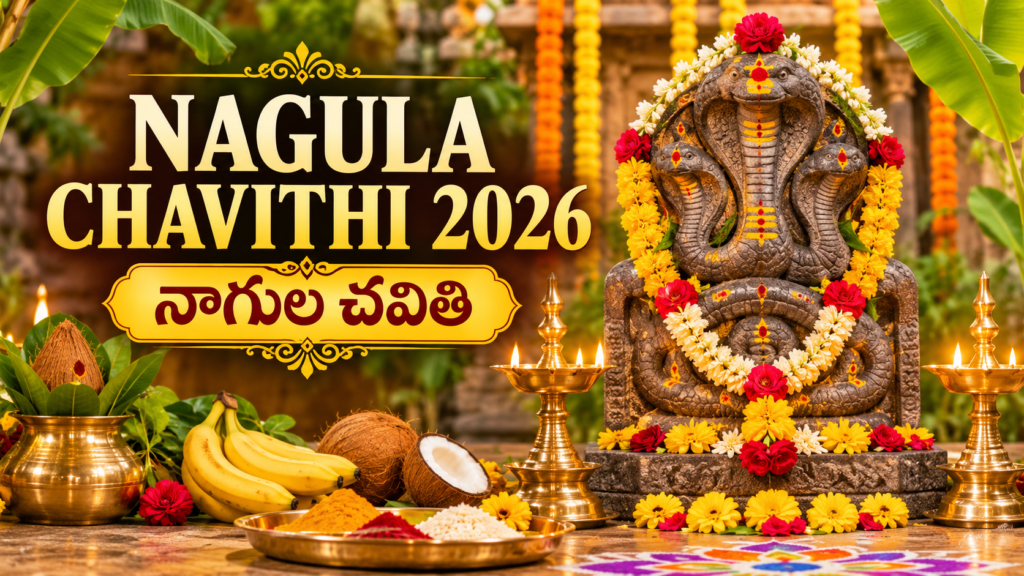
Nagula Chavithi 2026: Date, Puja Vidhi, Significance and Traditions
Nagula Chavithi is a traditional Hindu festival observed with devotion in Andhra Pradesh and Telangana. On this day, families worship Nag Devatas (serpent deities) and follow customs passed down through generations. Nagula Chavithi 2026 falls on Friday, 13 November. The occasion is associated with prayers for family well-being, prosperity and respect for nature. From preparing traditional offerings to visiting temples and observing a vratam, the festival holds a special place in many Telugu households.
Nagula Chavithi 2026 Date and Tithi
Nagula Chavithi is observed on Kartika Shukla Chaturthi, the fourth lunar day during the bright fortnight of the Hindu month of Kartika. In 2026, the festival falls on Friday, 13 November.
Here are the Panchang details for Hyderabad as a reference:
| Panchang Detail | Information |
|---|---|
| Festival | Nagula Chavithi (నాగుల చవితి) |
| Date | Friday, 13 November 2026 |
| Hindu Month | Kartika Masam |
| Paksha | Shukla Paksha |
| Tithi | Chaturthi (Chavithi) |
| Chaturthi Begins | Approximately 6:10 PM, 12 November |
| Chaturthi Ends | Approximately 8:43 PM, 13 November |
| Reference Location | Hyderabad, Telangana (IST) |
Nagula Chavithi Puja Muhurat
One Hyderabad-specific Panchang listing gives the Puja Muhurat as approximately 10:52 AM to 1:08 PM on 13 November 2026. This is a location-specific calculation, not a universal time for every city.
What Is Nagula Chavithi?
Nagula Chavithi is a Hindu festival dedicated to the worship of Nag Devatas, or serpent deities. The Telugu word "Nagula" refers to serpents, while "Chavithi" means the fourth lunar day, also known as Chaturthi.
The festival is particularly observed in Telugu-speaking regions. Devotees traditionally worship Naga images, idols or representations of serpent deities. Some families visit temples or traditional worship places and offer prayers with turmeric, kumkum, flowers and naivedyam.
For many households, the occasion is connected with prayers for the well-being of children, family happiness and prosperity. Women often take an important role in organising the household puja, although the way the festival is observed differs from family to family.
Religious and Cultural Significance of Nagula Chavithi
Serpents have an important place in Hindu religious stories, temple traditions and iconography. Nagas are associated with divine protection, spiritual symbolism and the natural world.
In Hindu traditions, the serpent Ananta or Shesha is associated with Lord Vishnu, while Vasuki is connected with Lord Shiva. Lord Subrahmanya, also known as Kartikeya, is worshipped in several South Indian traditions associated with Naga worship.
In Andhra Pradesh and Telangana, Nagula Chavithi is traditionally connected with family prayers and the worship of serpent deities. Some families observe the vratam for the welfare of their children, while others follow it as an important part of their Kartika Masam customs.
The festival also offers an opportunity to remember the importance of living respectfully alongside nature. Snakes have an ecological role, including helping control rodent populations. Their presence in cultural and religious traditions is one reason many communities encourage respect for these animals.
Why Is Nagula Chavithi Celebrated?
Nagula Chavithi is celebrated to worship Nag Devatas and observe traditional prayers associated with family well-being. Many devotees believe that sincere worship on this day brings divine blessings and helps protect their families.
In some households, mothers and other family members observe the vratam with prayers for their children's happiness and well-being. Other families focus on honouring Naga deities and continuing the religious practices followed by their elders.
Stories and beliefs connected with serpent deities also form part of the festival's cultural background. However, the exact vratam story, prayers and customs may differ between communities. Families generally follow the traditions passed down through their own lineages.
Nagula Chavithi Puja Vidhi
Nagula Chavithi Puja Vidhi refers to the traditional method of worshipping Nag Devatas. The following is a simple outline of common household preparations. The exact procedure may vary according to family custom and guidance from a priest.
- Clean the Puja Area: Clean the prayer space at home and arrange a picture, idol or Naga stone representation for worship.
- Prepare the Puja Samagri: Keep turmeric, kumkum, flowers, akshata, a lamp and traditional naivedyam ready before beginning the prayers.
- Decorate the Naga Deity: Apply turmeric and kumkum respectfully to the symbolic Naga representation, as followed in your family tradition.
- Light the Lamp: Light a traditional oil or ghee lamp and offer flowers while praying to the Nag Devatas.
- Offer Naivedyam: Present traditional preparations such as chalimidi, chimmili, fruits or other items customary in your household.
- Perform the Prayers: Recite the prayers or vratam story followed by your family. Seek blessings for peace, happiness and family well-being.
- Complete the Puja: Conclude the worship respectfully and distribute the prasadam among family members.
Nagula Chavithi Pooja Samagri
Families generally prepare a small collection of पूजा materials before beginning the Nagula Chavithi worship. The exact list depends on household customs and the type of puja being performed.
| Puja Material | Traditional Purpose |
|---|---|
| Turmeric (Pasupu) | Used in traditional worship and decoration. |
| Kumkum | Used as a customary auspicious offering. |
| Flowers | Offered as a mark of devotion. |
| Akshata | Rice grains used during prayers. |
| Oil or Ghee Lamp | Lit during the Puja. |
| Incense Sticks | Used during traditional worship. |
| Chalimidi and Chimmili | Traditional preparations offered as naivedyam. |
| Fruits and Bananas | Offered according to family custom. |
You do not necessarily need every item on this list. A simple and respectful puja using materials customary in your family is also followed in many households.
Nagula Chavithi Vratam and Fasting
Nagula Chavithi Vratam is observed by devotees as part of their religious and family traditions. In many Telugu households, women take the lead in organising the vratam and offering prayers for the well-being of their children and family.
Fasting practices differ between families. Some devotees observe a full-day fast, while others follow a partial fast or eat only customary foods after completing the puja. The time for breaking the fast also depends on household tradition and the guidance followed by the family.
There is no need to assume that every devotee must follow the same fasting rules. People should consider their personal circumstances and follow a suitable practice. Children, older adults and people with health or dietary concerns should not undertake restrictive fasting without appropriate guidance.
The main focus of the vratam is devotion, prayer and the continuation of meaningful family customs.
Traditional Food and Naivedyam for Nagula Chavithi
Traditional food preparations are an important part of many Nagula Chavithi celebrations. Families prepare simple homemade offerings and share them as prasadam after the puja.
Chalimidi
Chalimidi is a traditional Telugu sweet generally prepared using rice flour and jaggery. Depending on the household recipe, other ingredients may also be added. It is commonly associated with traditional religious offerings.
Chimmili
Chimmili is a traditional sweet preparation made with sesame seeds and jaggery. Its simple ingredients and familiar homemade taste make it a popular offering in several Telugu households.
Other Traditional Offerings
Some families also prepare soaked green gram known as vadapappu, bananas and seasonal fruits. The selection of naivedyam depends on regional customs and family preferences.
How Is Nagula Chavithi Celebrated in Andhra Pradesh and Telangana?
Nagula Chavithi has a strong place in the traditional festival calendar of Andhra Pradesh and Telangana. Families celebrate the occasion with household pujas, temple visits, traditional food and prayers.
In some places, devotees visit temples where Naga stones or serpent deity representations are worshipped. Other families arrange the puja at home and involve children in the preparations, helping them understand the customs followed by previous generations.
Mothers and grandmothers often share traditional vratam stories and explain the significance of Naga worship to younger family members. Chalimidi and chimmili may be prepared at home, and prasadam is shared with relatives.
Practices are not identical across every district or community. The details of fasting, offerings, temple visits and prayers can differ. Families often prefer to continue the customs followed in their own homes.
Difference Between Nagula Chavithi and Nag Panchami
Nagula Chavithi and Nag Panchami are both Hindu observances associated with the worship of serpent deities. However, they take place on different lunar dates and in different Hindu months.
| Details | Nagula Chavithi | Nag Panchami |
|---|---|---|
| Hindu Month | Kartika | Shravana |
| Tithi | Shukla Chaturthi | Shukla Panchami |
| Meaning | Fourth lunar day dedicated to Naga worship | Fifth lunar day dedicated to Naga worship |
| Regional Observance | Particularly associated with Telugu traditions | Observed in many parts of India |
| Common Practices | Naga puja, household vratam and traditional offerings | Serpent deity worship, prayers and temple observances |
Although both festivals honour Nag Devatas, Nagula Chavithi is not simply another name for Nag Panchami. They are separate observances in the Hindu calendar.
Frequently Asked Questions About Nagula Chavithi 2026
1. When is Nagula Chavithi in 2026?
Nagula Chavithi 2026 will be celebrated on Friday, 13 November 2026, in Andhra Pradesh and Telangana.
2. Why is Nagula Chavithi celebrated?
The festival is observed to worship Nag Devatas. Devotees traditionally offer prayers for family well-being, happiness and prosperity.
3. Which God is worshipped on Nagula Chavithi?
Nag Devatas, or serpent deities, are worshipped on this day. Some traditions also associate Naga worship with Lord Subrahmanya and Lord Shiva.
4. What is the significance of Nagula Chavithi?
Nagula Chavithi reflects traditional Hindu beliefs about serpent worship, family well-being and respect for nature. It is especially meaningful in Telugu-speaking communities.
5. What is the Nagula Chavithi Puja Vidhi?
The customary puja includes preparing the worship area, offering turmeric, kumkum and flowers to a Naga representation, lighting a lamp, offering naivedyam and reciting family prayers.
6. What are the traditional offerings for Nagula Chavithi?
Chalimidi, chimmili, fruits, bananas and other traditional preparations are commonly used as offerings. Customs differ between families.
7. Is Nagula Chavithi different from Nag Panchami?
Yes. Nagula Chavithi falls on Kartika Shukla Chaturthi, whereas Nag Panchami is observed on Shravana Shukla Panchami. Both festivals are associated with Naga worship.
8. How is Nagula Chavithi celebrated in Telugu states?
Families in Andhra Pradesh and Telangana observe the festival through household pujas, temple visits, traditional offerings, fasting customs and prayers to Nag Devatas.
Conclusion
Nagula Chavithi is a meaningful part of Telugu cultural and religious traditions. The festival brings families together through prayers, traditional offerings and customs that have been followed for generations.
As families celebrate Nagula Chavithi on 13 November 2026, the occasion also provides a reminder to respect nature and protect the wildlife associated with its traditions. May the festival bring happiness, peace and togetherness to every family.
To explore more Hindu festival dates and daily Panchang information, visit TodayPanchang.com.
Note: Festival dates and Panchang timings are provided for general information. Local observance rules and family traditions may differ. Confirm important puja timings with your local temple or trusted Panchangam.