
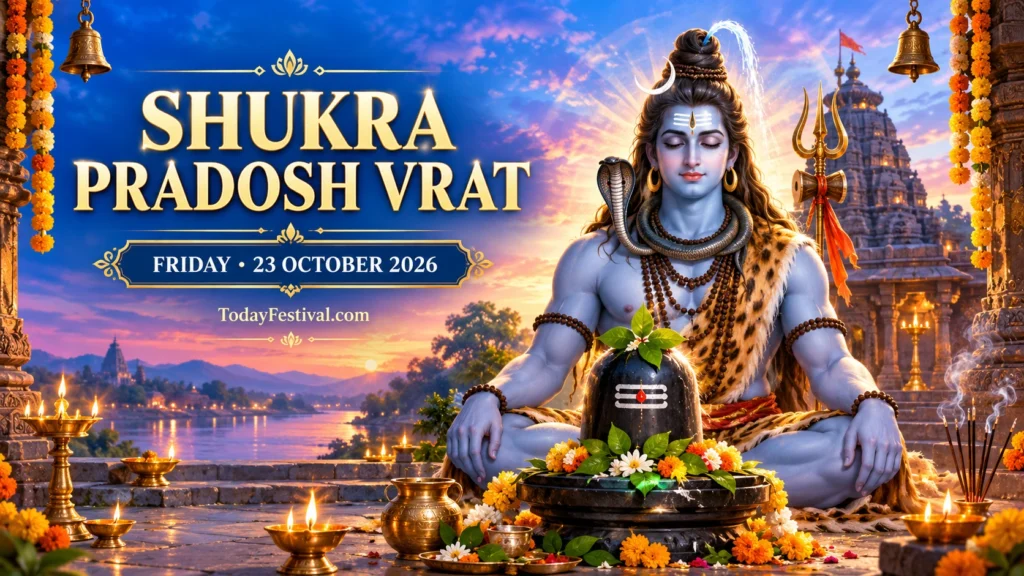
Shukra Pradosh Vrat 2026: Friday, 23 October
Shukra Pradosh Vrat is observed in honour of Lord Shiva during the Pradosh period around sunset. This Friday, 23 October 2026, falls on Ashwina Shukla Trayodashi. Learn about the festival's significance, traditional puja steps, fasting customs and important Panchang timings.
Shukra Pradosh Vrat at a Glance
- Festival
- Shukra Pradosh Vrat
- Date
- 23 October 2026
- Weekday
- Friday (Shukravara)
- Hindu month
- Ashwina (Ashwin)
- Paksha and Tithi
- Shukla Paksha, Trayodashi during the evening observance
- Main deity
- Lord Shiva and, in many traditions, Goddess Parvati
Panchang timings in this article use Pune, Maharashtra, as the reference location. Local timings may differ.
Why Is Shukra Pradosh Vrat Observed on 23 October 2026?
Shukra Pradosh Vrat falls on Friday, 23 October 2026. Pradosh Vrat is associated with Trayodashi, the thirteenth lunar day of the Hindu calendar, and the evening period around sunset. Since this observance falls on Friday, it is known as Shukra Pradosh Vrat. The word Shukra refers to Friday in this weekday-based naming convention.
On this date, the Moon's waxing fortnight is in progress. In the Pune reference Panchang, Shukla Dwadashi continues into the afternoon, and Shukla Trayodashi begins at approximately 2:35–2:36 PM. Trayodashi then continues into Saturday, 24 October. The relevant evening Pradosh observance takes place on Friday.
Pradosh Vrat is observed twice in a typical lunar month: once during the waxing fortnight and once during the waning fortnight. Devotees follow the applicable local Panchang to determine the observance date and time.
Significance of Shukra Pradosh Vrat
Shukra Pradosh Vrat is a devotional observance dedicated primarily to Lord Shiva. Many devotees also worship Goddess Parvati during the evening puja. It is a time for prayer, reflection and following familiar religious traditions.
The Pradosh period is associated with twilight, the transition between daytime and night. For many Shiva devotees, this makes the evening an appropriate time to offer prayers, light a diya, recite devotional verses or visit a Shiva temple.
In Hindu devotional traditions, worship on Pradosh is associated with seeking blessings for peace, well-being and spiritual growth. These are religious beliefs and intentions rather than guaranteed outcomes.
The Friday observance is called Shukra Pradosh. Other Pradosh observances are named according to the weekday on which they fall. The central focus remains devotion to Lord Shiva, although individual rituals differ between households and regions.
Shukra Pradosh Vrat Puja Vidhi
The following is a general guide to commonly followed practices. You can adapt it to your family's customs, regional tradition and the instructions followed at your local temple.
-
Prepare the prayer space
Clean the area where you intend to worship. Arrange an image of Lord Shiva or a Shiva Lingam, if available, along with the offerings you plan to use.
-
Get ready for the evening puja
Many devotees bathe and wear clean clothes before worship. Take a quiet moment to settle your thoughts and set an intention for the observance.
-
Arrange the traditional offerings
Flowers, water, a diya and bilva leaves are among the items commonly used in Shiva worship. Choose offerings according to your custom and availability; not every item is compulsory in every tradition.
-
Offer prayers to Lord Shiva
Pray to Lord Shiva and, where customary, Goddess Parvati. Devotees may offer water to the Shiva Lingam using a clean vessel and make other offerings according to their tradition. Follow the temple's guidance if you are worshipping there.
-
Recite a prayer or mantra
You may chant “Om Namah Shivaya,” read a familiar Shiva prayer or listen to the Pradosh Vrat Katha. Select a practice that is meaningful to you rather than feeling obliged to complete a particular number of repetitions.
-
Perform the evening observance
Arrange your main prayer during the locally applicable Pradosh period. Light a diya safely, offer your prayers and conclude the puja according to your household or temple tradition.
-
Conclude the fast according to your custom
People who have been fasting traditionally conclude their observance according to their own practice. There is no need to compromise your health to follow a fasting custom.
Puja Samagri for Pradosh Vrat
If you are planning a traditional Shiva puja, these are some commonly used items. The exact list depends on your family or temple tradition.
- Flowers
- Bilva leaves, where customary
- Clean water
- Diya and suitable oil or ghee
- Incense, if used
- Fruit or other customary offerings
- A picture of Lord Shiva or Shiva Lingam
- Prayer book or mantra, if desired
Use items that are suitable for your tradition and available to you. A long list of offerings is not necessary for everyone. Follow any specific instructions provided by the temple you visit.
Fasting Rules and Common Practices
Some devotees observe a full fast on Pradosh Vrat, while others follow a simpler fast or offer prayers without fasting. Practices differ according to religious tradition, personal circumstances and household customs.
Some people avoid particular foods, eat permitted fasting foods or wait until their evening worship is complete before eating. There is no single routine followed by every devotee.
If you observe a fast, choose an approach appropriate to your circumstances. Children, older adults, pregnant people and anyone with a medical condition or medication-related dietary needs should not undertake restrictive fasting without appropriate medical guidance. Religious observance should not require ignoring your health.
People who cannot fast may still choose to pray, visit a temple or participate in other devotional activities according to their beliefs.
Today's Panchang: 23 October 2026
Panchang is a traditional Hindu calendar system that describes five principal elements: Tithi, weekday, Nakshatra, Yoga and Karana. It is also used to identify festival observances and customary auspicious periods.
| Panchang detail | Timing or value |
|---|---|
| Weekday | Friday (Shukravara) |
| Hindu month | Ashwina (Ashwin) |
| Paksha | Shukla Paksha (waxing fortnight) |
| Tithi at sunrise | Shukla Dwadashi |
| Trayodashi begins | Approximately 2:35–2:36 PM on 23 October |
| Trayodashi ends | Approximately 1:36 PM on 24 October |
| Nakshatra | Purva Bhadrapada, until approximately 9:03 PM |
| Yoga | Dhruva, until approximately 10:08 PM |
| Sunrise | Approximately 6:30 AM |
| Sunset | Approximately 6:06 PM |
| Pradosh observance window | 6:07 PM to 8:36 PM |
| Rahu Kaal | Approximately 10:51 AM to 12:18 PM |
| Abhijit Muhurat | Approximately 11:55 AM to 12:42 PM |
| Yamaganda | Approximately 3:12 PM to 4:39 PM |
| Gulika Kaal | Approximately 7:57 AM to 9:24 AM |
Panchang calculations can differ slightly between calendar systems. The times above are rounded reference values for Pune, Maharashtra, and are not universal timings for all of India. Trayodashi begins in the afternoon, so the Tithi present at sunrise is different from the Tithi applicable to the evening Pradosh observance.
Why local Panchang timings matter
Sunrise and sunset depend on location. Tithi boundaries are determined by the positions of the Sun and Moon, while the observance of a festival follows its applicable calendar rules. As a result, a puja window published for Pune may not match the timings for Delhi, Mumbai or another city.
If you are performing Pradosh Puja outside Pune, use timings calculated for your own city and date. The reference window above should not be copied as a nationwide time.
Do's and Don'ts for Shukra Pradosh Vrat
Common practices
- Prepare a clean and peaceful prayer space.
- Follow your family's customary puja procedure.
- Use the local Pradosh timing for your city.
- Offer prayers and devotional recitations if desired.
- Choose fasting practices suitable for your circumstances.
Keep in mind
- Do not assume every household follows identical rituals.
- Do not treat approximate timings as exact for every city.
- Do not compromise your health to complete a fast.
- Do not assume every customary item is compulsory.
- Do not rely on fear-based claims about missing a ritual.
Regional and Family Traditions
Pradosh Vrat is observed by Shiva devotees in different parts of India. The main focus is worship during the appropriate evening period, but the details can vary.
Some families perform an elaborate puja at home, while others visit a Shiva temple. Some listen to the Pradosh Vrat Katha or recite devotional texts, and others keep the observance simple with prayer and a diya.
Offerings, fasting rules, the form of worship and the way a fast is concluded may also differ. These differences are part of the variety of Hindu practice. When a family follows a particular regional calendar or temple tradition, that guidance may be important in determining the details of the observance.
Frequently Asked Questions
When is Shukra Pradosh Vrat in October 2026?
Shukra Pradosh Vrat is observed on Friday, 23 October 2026. It falls during Ashwina Shukla Trayodashi in the Hindu lunar calendar. The relevant evening Pradosh observance occurs on Friday, although Trayodashi continues into Saturday, 24 October.
Why is it called Shukra Pradosh Vrat?
The word Shukra refers to Friday, while Pradosh refers to the evening observance associated with Trayodashi. A Pradosh observance falling on Friday is therefore called Shukra Pradosh Vrat.
Which deity is worshipped during Pradosh Vrat?
Lord Shiva is the principal deity worshipped during Pradosh Vrat. Many devotees also worship Goddess Parvati. The particular prayers, offerings and supporting rituals depend on household and regional customs.
What is the significance of Pradosh Vrat?
Pradosh Vrat is a devotional observance associated with Lord Shiva and the twilight period around sunset. Devotees may use this time for prayer, traditional worship and spiritual reflection. Blessings sought during worship are matters of religious belief.
What is the Pradosh Puja timing in Pune?
The reference window for Pune on 23 October 2026 is approximately 6:07 PM to 8:36 PM IST. Published windows may vary depending on the Panchang calculation method. Check the local calendar before planning a temple visit or ritual.
Is fasting compulsory on Pradosh Vrat?
Fasting is a customary practice for many devotees, but observance differs between people and families. Some perform a full fast, others follow a simpler dietary routine, and some offer prayers without fasting. Personal health needs should always be taken into consideration.
Observing Shukra Pradosh Vrat on 23 October 2026
Shukra Pradosh Vrat offers devotees an opportunity to spend time in prayer and worship Lord Shiva during the evening observance. Whether you perform a traditional puja at home, visit a temple, recite a familiar mantra or keep the day simple, choose practices that reflect your beliefs and family customs.
Before performing the evening puja, check the Panchang for your own location. This is especially important when using published sunrise, sunset, Tithi or Pradosh timings.
May your observance bring you a peaceful moment for prayer, reflection and devotion.