INDIAN CULTURE · FESTIVAL CALENDAR
Hindu Festivals in India 2026: Dates, Traditions and Celebrations
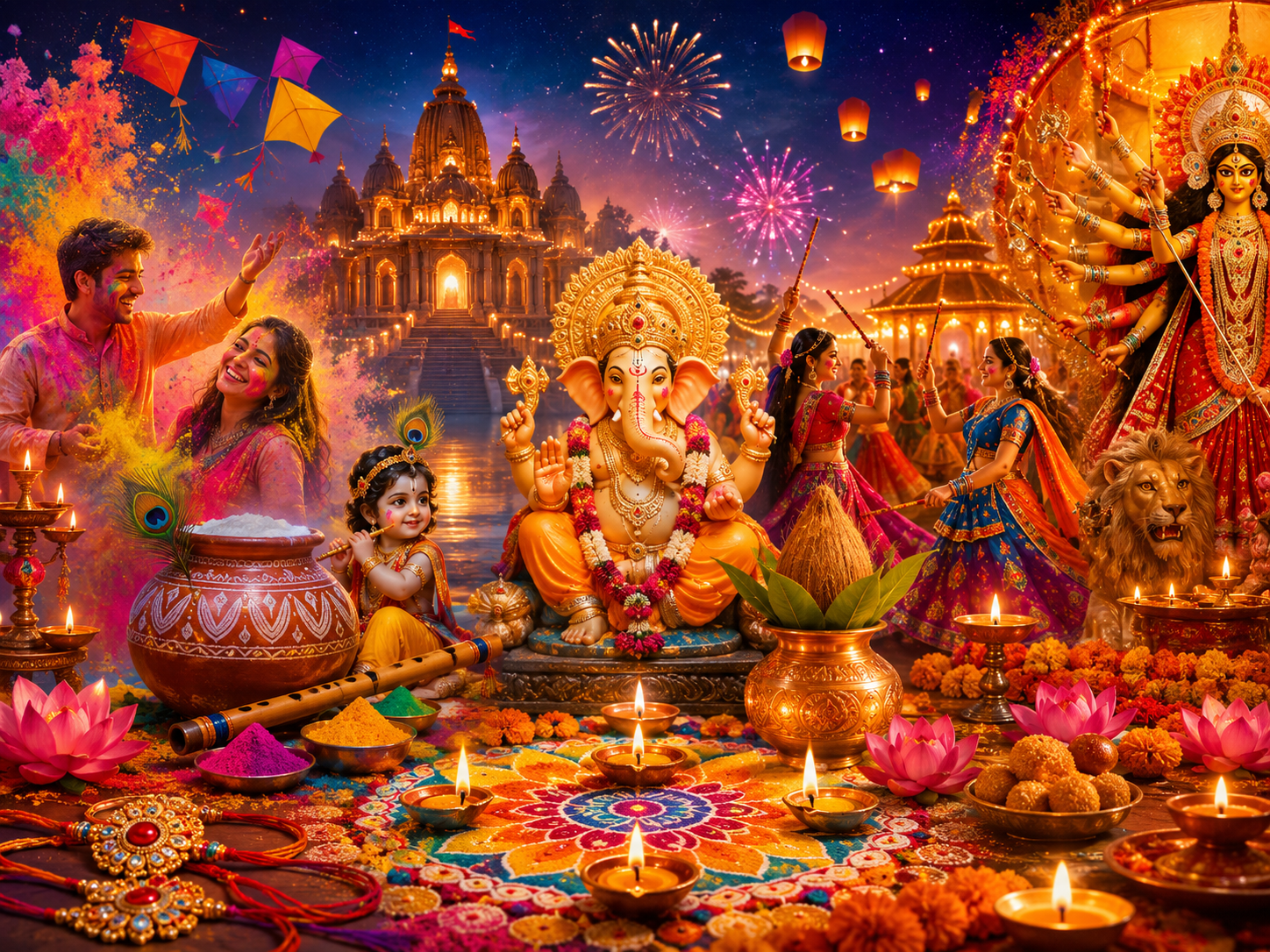
From the vibrant colours of Holi to the glowing diyas of Diwali, Hindu festivals bring families and communities together throughout the year. Explore the major Hindu festivals in India in 2026, their expected dates, cultural significance and the traditions that make each celebration special.
In India, festivals are woven into everyday life. They bring people together through family gatherings, prayer, traditional food, music, dance, colourful decorations and acts of generosity. Some celebrations honour a deity or a story from Hindu tradition, while others mark seasonal changes, harvests and the beginning of a new year.
The Hindu calendar follows both lunar and solar cycles, so many festival dates change from one Gregorian year to the next. The year 2026 includes celebrations such as Makar Sankranti, Maha Shivaratri, Holi, Ram Navami, Krishna Janmashtami, Ganesh Chaturthi, Navratri, Dussehra and Diwali.
This guide brings together important dates and traditions to help you plan ahead. It also includes selected regional celebrations that form part of India's wider cultural year. Because customs and calendar calculations differ, the dates below are a general guide rather than a substitute for a location-specific Hindu Panchang.
Hindu Festivals 2026 at a Glance
*Indicative dates from selected 2026 calendars. Holi and some other observances may fall on different dates depending on the regional Panchang and local tradition.
Month-by-Month Hindu Festival Calendar 2026
Use this calendar to find notable festivals throughout the year. It highlights major observances rather than listing every Ekadashi, Purnima, Amavasya or regional religious event.
🌼 January 2026
- — Pausha Purnima
- — Sakat Chauth
- — Makar Sankranti and Pongal
- — Vasant Panchami
- — Ratha Saptami
Makar Sankranti marks a solar transition and is celebrated with regional harvest customs. Pongal is a major Tamil harvest festival, while Vasant Panchami is associated with Saraswati, learning and the arrival of spring.
🔱 February 2026
- — Magha Purnima
- — Maha Shivaratri
- — Amalaki Ekadashi
Maha Shivaratri is dedicated to Lord Shiva. Devotees may fast, visit temples, chant prayers and stay awake for night-time worship, according to their traditions.
🎨 March 2026
- March 2–3 — Holika Dahan, depending on local calendar
- March 3–4 — Holi, depending on region
- — Ugadi, Gudi Padwa and Chaitra Navratri begin
- March 26–27 — Ram Navami, depending on tradition
Holi welcomes spring with colours, gatherings and festive food. Ugadi and Gudi Padwa mark the new year for different regional communities, while Chaitra Navratri is devoted to Goddess Durga and her forms. Ram Navami celebrates the birth of Lord Rama.
🌷 April 2026
- — Hanuman Jayanti
- — Vishu, Vaisakhi and Bohag Bihu seasonal celebrations
- — Akshaya Tritiya and Parashurama Jayanti
- — Narasimha Jayanti
April brings devotion and new beginnings. Hanuman Jayanti honours Lord Hanuman, Akshaya Tritiya is regarded as auspicious in several Hindu traditions, and regional new-year and harvest celebrations showcase India's cultural diversity.
🌿 May 2026
- — Vat Savitri Vrat and Shani Jayanti
- — Ganga Dussehra
- — Padmini Ekadashi
Vat Savitri Vrat is observed by many married women according to regional traditions. Ganga Dussehra celebrates the sacred river Ganga, while Ekadashi observances focus on devotion and self-discipline.
☀️ June 2026
- — Nirjala Ekadashi
- — Vat Purnima Vrat in selected regional calendars
Nirjala Ekadashi is traditionally associated with a particularly strict fast in some Hindu traditions. Fasting customs vary, and people should consider their health and personal circumstances.
🛕 July 2026
- — Jagannath Rath Yatra
- — Devshayani Ekadashi
- — Guru Purnima
Jagannath Rath Yatra is known for its chariot procession, especially in Puri. Guru Purnima honours teachers and spiritual guides, while Devshayani Ekadashi holds significance in Vaishnava traditions.
🌧️ August 2026
- — Hariyali Teej
- — Nag Panchami
- — Onam, in the selected calendar
- — Raksha Bandhan and Varalakshmi Vrat
- — Kajari Teej
This month includes monsoon traditions, sibling bonds and regional festivities. Raksha Bandhan celebrates the bond between siblings, while Onam is Kerala's major harvest and cultural festival, celebrated by people of different religious backgrounds.
🐘 September 2026
- — Krishna Janmashtami
- — Ganesh Chaturthi and Hartalika Teej
- — Radha Ashtami
- — Anant Chaturdashi and Ganesh Visarjan in selected calendars
Krishna Janmashtami celebrates the birth of Lord Krishna. Ganesh Chaturthi honours Lord Ganesha with home and community worship, while Ganesh Visarjan marks the ceremonial immersion of idols where that custom is followed.
🌺 October 2026
- — Mahalaya Amavasya
- — Sharad Navratri begins
- October 16–21 — Durga Puja period in the selected regional calendar
- — Dussehra / Vijayadashami in many regions
- — Papankusha Ekadashi
- — Sharad Purnima
- — Karwa Chauth
Sharad Navratri honours Goddess Durga through worship, music, dance and regional customs. Dussehra represents the victory of good over evil. In Bengal and some eastern regions, Bijoya Dashami may be observed on October 21, so local calendars should be checked.
🪔 November 2026
- — Ahoi Ashtami
- — Dhanteras
- November 7–8 — Kali Chaudas and Narak Chaturdashi, according to regional calendars
- — Diwali / Lakshmi Puja in the selected calendar
- November 9–11 — Govardhan Puja and Bhai Dooj period; dates vary by calendar
- — Chhath Puja
- — Tulsi Vivah
- — Kartik Purnima and Dev Diwali
Diwali is celebrated with lamps, decorations, family gatherings and regional religious customs. Chhath Puja honours the Sun through carefully observed rituals, while Dev Diwali is associated with sacred celebrations in Varanasi and other communities.
🙏 December 2026
- — Vivah Panchami
- — Gita Jayanti and Mokshada Ekadashi
- — Dattatreya Jayanti
December includes devotional observances connected with Lord Rama, the Bhagavad Gita and Lord Dattatreya. Many devotees mark these days with prayer, religious reading and visits to temples.
Calendar note: The dates above are indicative and drawn from selected 2026 Hindu calendars. They are not a universal, location-independent Panchang. Always verify tithi, puja, fasting and Parana dates locally before performing time-sensitive rituals.
What Makes Hindu Festivals Special?
Hindu festivals are diverse, and their meanings depend on the deity, story, region and community involved. Still, many celebrations share a few familiar themes: devotion, renewal, gratitude, family connections and the hope of beginning again.
Faith and devotion
Prayer, temple visits, devotional songs and family puja give many festivals their spiritual meaning.
Family and community
Festivals create opportunities to reconnect, share meals, welcome guests and maintain family customs.
Art and celebration
Rangoli, folk music, dance, clothing, decorations and regional foods express local cultural identity.
Nature and seasons
Solar transitions, harvests and seasonal changes shape many festivals across different parts of India.
Popular Hindu Festivals and Their Significance
Makar Sankranti
Makar Sankranti marks the Sun's transition into Makara in the traditional Indian solar calendar. Celebrations differ by region and include harvest foods, kite flying, community gatherings and gratitude for agricultural life.
Maha Shivaratri
Dedicated to Lord Shiva, Maha Shivaratri is observed by many devotees through prayer, fasting and night-time worship. Its observances differ according to family and temple traditions.
Holi
Holi is widely known as the festival of colours. The celebrations commonly include coloured powders, music, sweets and time with friends and family. Holika Dahan, where observed, precedes the colour celebrations and carries its own religious significance.
Raksha Bandhan
Raksha Bandhan celebrates the bond between siblings. In many families, a rakhi is tied around a sibling's wrist as a symbol of affection, care and connection.
Ganesh Chaturthi
Ganesh Chaturthi honours Lord Ganesha. Home worship, public pandals, devotional music and community celebrations are important in many regions, particularly Maharashtra. Practices vary across households.
Navratri and Dussehra
Navratri is a festival period associated with Goddess Durga and her forms. Depending on the region, the days may involve fasting, temple ceremonies, Garba, Dandiya Raas or Durga Puja. Dussehra or Vijayadashami marks a major conclusion to the season in many traditions.
Diwali
Diwali, also called Deepavali, is associated with light, renewal and the triumph of good over evil. Families may clean and decorate their homes, light diyas, exchange sweets, gather with loved ones and perform Lakshmi Puja. The customs differ across India.
How Are Festivals Celebrated Across India?
There is no single way to celebrate Hindu festivals. Local languages, regional histories, food traditions, devotional lineages and family customs all shape how an occasion is observed.
- North India: Holi, Janmashtami, Navratri, Dussehra and Diwali are important in many communities, with local variations in rituals.
- West India: Gudi Padwa, Ganesh Chaturthi, Navratri, Garba and Dandiya are prominent in many Maharashtra and Gujarat communities.
- South India: Pongal, Ugadi, Vishu and other regional observances reflect seasonal calendars, new-year traditions and local customs.
- East India: Durga Puja and Lakshmi Puja are significant in several communities, with distinctive artistic, family and public traditions.
- Across regions: Many festivals are shared nationally, but their names, foods, observance dates and rituals may differ.
India's broader cultural calendar also includes celebrations from Buddhist, Jain, Sikh, Muslim, Christian and other communities. Recognising this diversity helps explain why a cultural festival calendar is broader than a Hindu religious calendar.
How to Prepare for Hindu Festivals in 2026
- Check the date for your city. Use a regional calendar or Panchang, especially when an observance depends on tithi or sunrise.
- Learn the meaning of the occasion. Understanding the story or tradition behind a festival can make the celebration more meaningful.
- Plan food and family arrangements. Prepare traditional recipes, arrange visits and consider any dietary requirements.
- Follow your family's customs. Rituals can differ, so avoid treating one family's practice as a universal rule.
- Celebrate thoughtfully. Keep public spaces clean, use fireworks responsibly where permitted and consider quieter celebrations that are more comfortable for children, older people and animals.
Festival Wishes to Share Throughout 2026
These simple greetings work for family messages, festival cards and social posts throughout the year.
🌸 May every festival bring your home more happiness, peace and togetherness.
🪔 Wishing you a year filled with meaningful traditions, warm memories and new beginnings.
🙏 May your celebrations be filled with kindness, gratitude and the company of loved ones.
🎉 Celebrate every moment and make beautiful memories with the people who matter most.
🌺 May the traditions you cherish bring generations closer and keep cultural memories alive.
💛 Wishing you a joyful festival season filled with sharing, caring and community spirit.
Frequently Asked Questions
What are the major Hindu festivals in India in 2026?
When is Holi in India in 2026?
When is Diwali in India in 2026?
Why do Hindu festival dates change every year?
Are Hindu festival dates the same across India?
What is a Hindu Panchang?
Celebrate Every Moment in 2026
Hindu festivals offer many ways to connect with faith, family, community and cultural traditions. From the colours of Holi and the devotion of Janmashtami to the lights of Diwali, every celebration has its own story and character.
Use this 2026 calendar to plan ahead, discover the significance of important observances and learn about celebrations across India. For more festival dates, cultural stories, wishes and guides, explore TodayFestival.com — Celebrate Every Moment.
Calendar disclaimer: This is a general editorial guide to selected festivals, not a complete daily Panchang. Dates are indicative and may differ according to location, tithi rules and regional customs. Confirm locally before planning a time-sensitive ritual.